I'm posting a lot of comments today.
I think it works for people with M-shaped hair loss. I barely sell it on the Internet too, and I ordered it yesterday, so I think it will come out soon..
Maybe I'm going to take this because of chronic depression and head stress, but I'm not sure about psychiatric drugs with severe side effects.
I hope we have a comrade. I'm selling this herb on the internet, but if you haven't found it, I'll give you a ripple.
In fact, it is said that the M shape is more involved in stress than the top of the head.
The following herbs are actually prescribed for mild depression in Europe.
There are few psychiatric medicinal herbs or side effects, so they are easily available for tea purposes on the Internet.
Johancho/St. John's Wort
Scientific name Hypericum perforum English name St. John's Wort German name Johanniskraut
Origin Europe, West Asia
History and Culture Johancho, which has long been considered to have magical and mysterious power, was used as a means of expelling evil spirits or preventing diseases from superstitious witchcraft. For this reason, Johancho was also called Fuga daemonum, which means " grass chasing the devil." The etymology of the scientific name hypercicum is Greek, and the analysis and interpretation of this word are multiplied. There is no disagreement that hyper, the first constituent sentence of the scientific name, means 'above', but there are several other explanations for the second constituent. One of the commonly accepted explanations is that the etymology of the second component is ereike, which means 'forest' or 'shade'. Based on an early premise, Johancho's name comes from the fact that it grows larger than among the bushes or shrubs. The other explanation is that the second component of the scientific name is eikon, which probably means 'the emergence of unwanted shapes'. If so, Johancho has the etymology of grass that reigns over unwanted shapes, which, as already mentioned, is related to the use of Johancho as a religious symbol. Meanwhile, the first time the generic name "St. John's" was used was around the 6th century, which is related to St. John the Baptist. One theory says that it originated from the appearance of red spots on John's leaves as a symbol of St. John's blood on August 29, when John was executed. Another theory explains that this name comes from believing that June 24, St. John's feast day, is the best day to harvest John's grass. This theory can be said to be related to the belief that in many countries, the dew on John's petals is collected and applied to the eyes at the dawn of St. John's feast to prevent eye disease in the following year. On the other hand, the species name perforum looks like a hole or perforation, but is actually related to a small dot on the leaf, a fat line below the surface of the leaf. Johancho's flower is related to light, so it symbolizes the sun that drives away the devil by retreating the darkness.
Yohancho, a perennial plant that can grow up to 1 m in plant characteristics size, belongs to the family Puleidae. Several stems emerge from the short and thick rhizosphere, with cotton at the bottom and branches at the top. The leaf that encounters has few leaf stems and is egg-shaped or straight. The edges of the leaves are serrated and smooth. There is a translucent mammary gland on the leaves. Numerous yellow flowers gather to make umbrella-shaped flower spins. The five calyx leaves are green and narrow. The five golden petals are elliptical and have small serrated edges. 50-60 operations surround the ovary. The flowering period is between June and August, and the harvest period is between July and August.
Use part: Johancho leaves and fresh Johancho flowers
Key ingredients Hypericin, Refinery, Flavin, Hyperporin, and Tannin
Efficacy Johancho has been proven to be effective in treating depression, according to clinical trials and recent studies by doctors. It has a good effect on mild symptoms of depression or anxiety and fear caused by nervousness, and you should drink Johancho tea consistently for at least six weeks to have a sweet effect. When used for external use, Johancho has a convergence action, antibacterial action, and inhibiting inflammation. The flowers of Johancho can be immersed in oil and used for wound treatment, first-degree burns, and muscle pain.
How to use ◈ Tea: Boil 2-4g (1st spoon = 1.8g) of chopped Johancho in boiling water for 5-10 minutes and drink it.





 K4993236009
 로또맘911
 다두리
다두리
 K4983758792

 Mopro Clinic
 MO.1 plastic surgery
 Hannaeve plastic surgery
 Modi hariplant
 Momo Clinic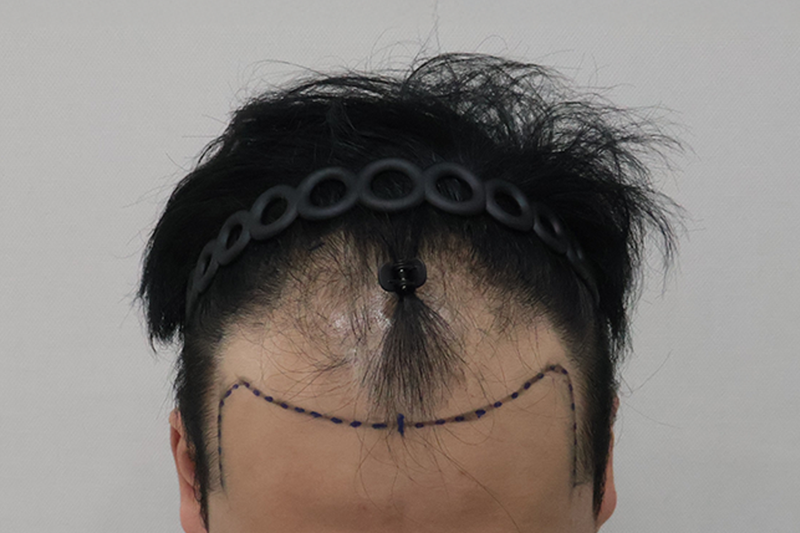
 HAIRO HAIR TRANSPLANT CENTER Dongtan
 MYMO HAIR TRANSPLANT CENTER Incheon
 HAIRO HAIR TRANSPLANT CENTER Daegu
 Rizmo Clinic - Busan Branch
 The Nobleline Center for Alopecia Care
 Mammoth Hair Restoration Center, Apgujeong
 NEWHAiR
 MOJELIM Hair Transplant
 Mo&Bless Hair Clinic
 Incheon Mammoth Hair Restoration Center
 Modaol Hair Transplant
 Mowoolim Clinic
 FORHAIR Hair Transplant Korea
 apgujeong mobien
 Modeunmo Clinic
 Mammoth Hair Restoration Center Busan
 MOBARUN HAIR SURGERY
 Mo Jaesung Plastic Surgery & Hair Transplant Center
 MONARA dermatology clinic
 MOMO HAIR TRANSPLANT
 Moderhamm Clinic — Hair Transplant Center
 Yonsei Mobelle Clinic - Incheon Branch
 Yong Doctor Hair Transplant Surgery
 HAIRO HAIR TRANSPLANT CENTER Busan
 Busan Grow House
 Momo Clinic
 MOMO's Suwon branch
 The Jongno Headquarters of the Yonsei Mobel House
 MOEM Clinic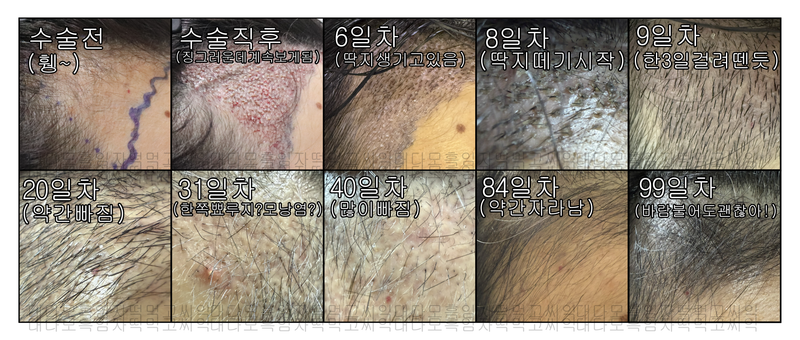
 Dana Plastic Surgery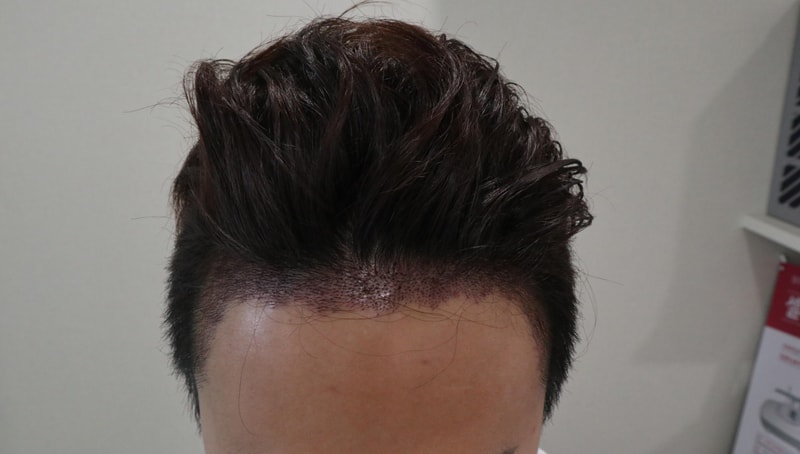
 MOUDA CLINIC
 WOOMCHAN Hair Transplant Clinic
 moart clinic
 an alpha-mocking circle
 HAIRO HAIR TRANSPLANT CENTER Jeonju
 Yonsei Mobelle Clinic - Daegu Branch
 JP Hair Transplant Clinic
 Banal Plastic Surgery Clinic
 GLOWELL
 Moment Clinic
 Motion Hair Clinic
 MOAMAN CLINIC



Comments