




- Surgery Method non-cutter
- Implanted Amount 7616grafts (3808Hair follicle)
- Surgery Progress 260days
- Age Range early 40s
Hair transplantation is more important than anything else because the final result is finally confirmed after a year.
It is a space where members are diagnosed with their condition after surgery and counseled on postoperative management, case-by-case occurrence, and additional supplementation methods.
It has the most clinical data in the world, where doctors related to hair transplantation also visit to study cases.
Thank you to all the seniors who left a meaningful record that can't express its value to someone preparing for surgery.
Leaving photo data after surgery is also "patient strength" and is a strong insurance policy against future unexpected surgical outcomes.

[Noble Line Clinic]
9465 MOM mass transplant 8 months early graduation!
-
5days ago
-
831
4
-
Satisfaction with Surgery
5.0
-
Scope of surgery
-
 Type A
-


(After surgery)
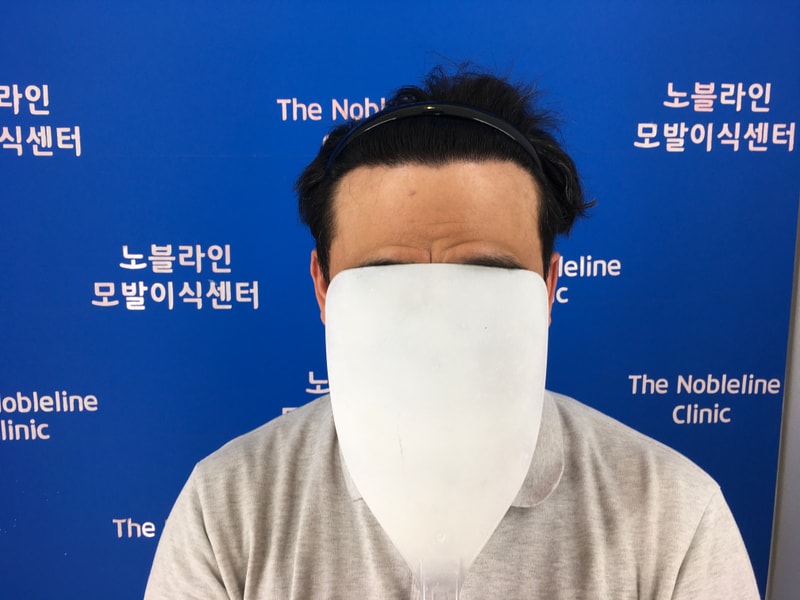
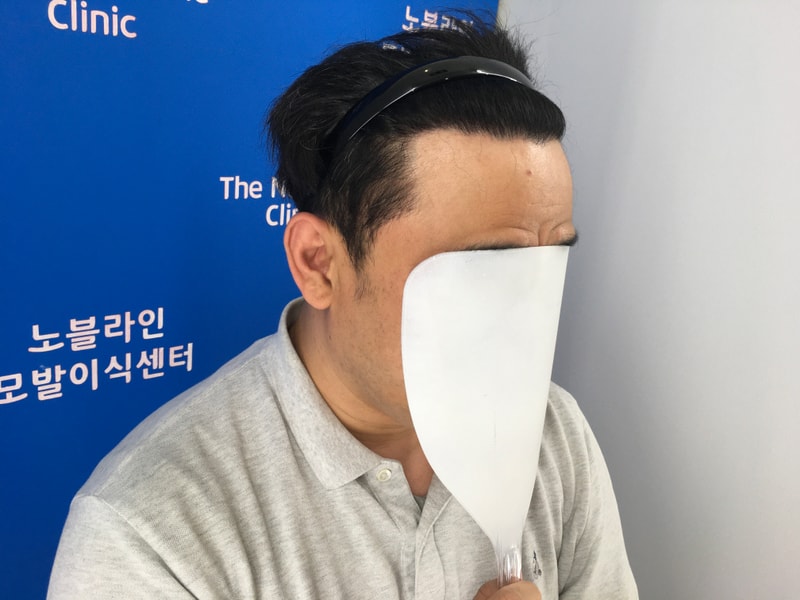
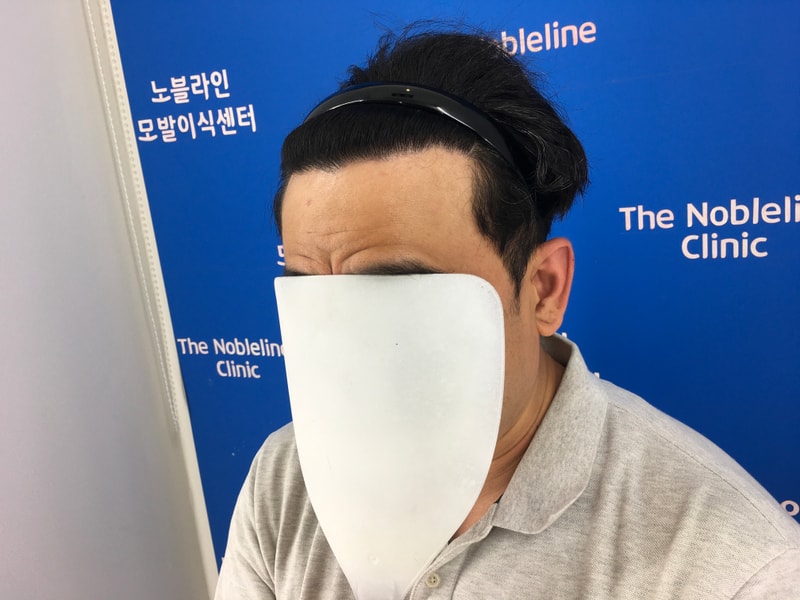
I was thinking about Hair Transplant because of M-shaped hair loss, and at first, I was consulted at 4OO and diagnosed with 1,900 hair follicles, and even completed my surgery appointment. At that time, I was going to proceed without much thought, but I changed my mind a little when my senior at school recommended a The Nobleline Center for Alopecia Care.
I didn't really intend to move to another hospital because I had already made an appointment at another hospital. However, my senior strongly recommended it, and I visited The Nobleline Center for Alopecia Care with the intention of receiving counseling.
When I first entered the hospital, my impression was that it was neat. It was not a fancy or bustling atmosphere, but rather calm, so I felt comfortable. After talking briefly with the counseling manager, I consulted with the director in earnest, and from then on, my mind began to change little by little.
The director accurately grasped the part I was worried about and presented the design and direction I wanted in much detail. The explanation of how to make the results was impressive rather than just the feeling of planting a head.
But I was really surprised to see the estimate I received after consultation.
PoOO recommended 1,900 hair follicles because The Nobleline Center for Alopecia Care explained that you need as many as 3,500 hair follicles. It was almost double the figure.
At first, I wondered why there was such a difference. But as I listened to the consultation, I came to understand why.
First of all, it was confirmed to increase the forward density, and then the M-shaped part had to be filled, but this was the problem.
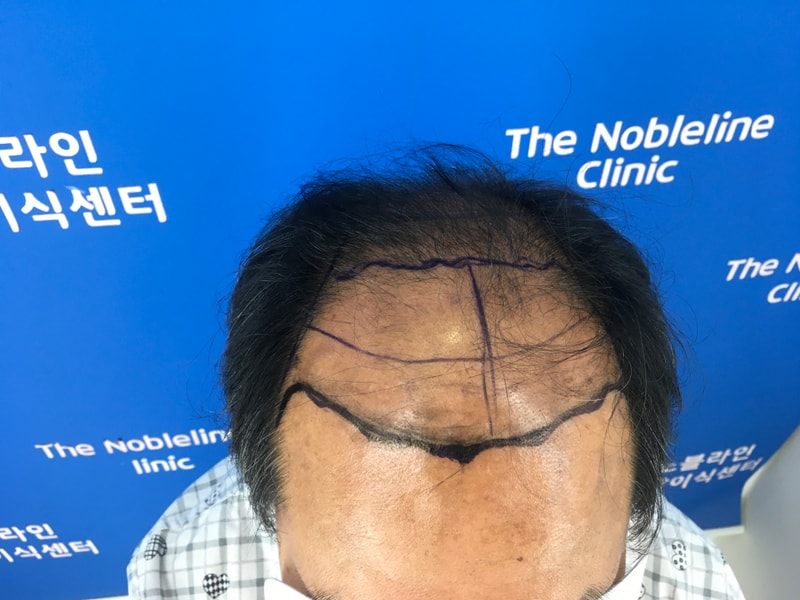
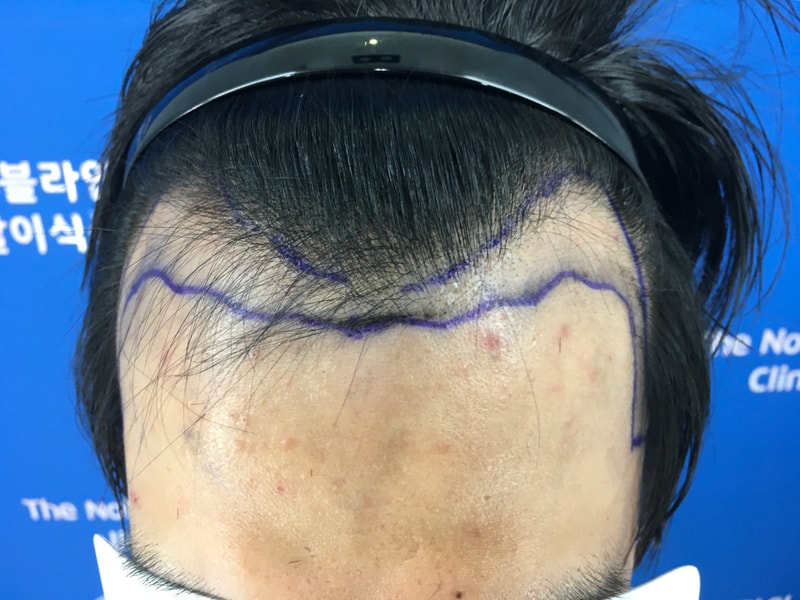
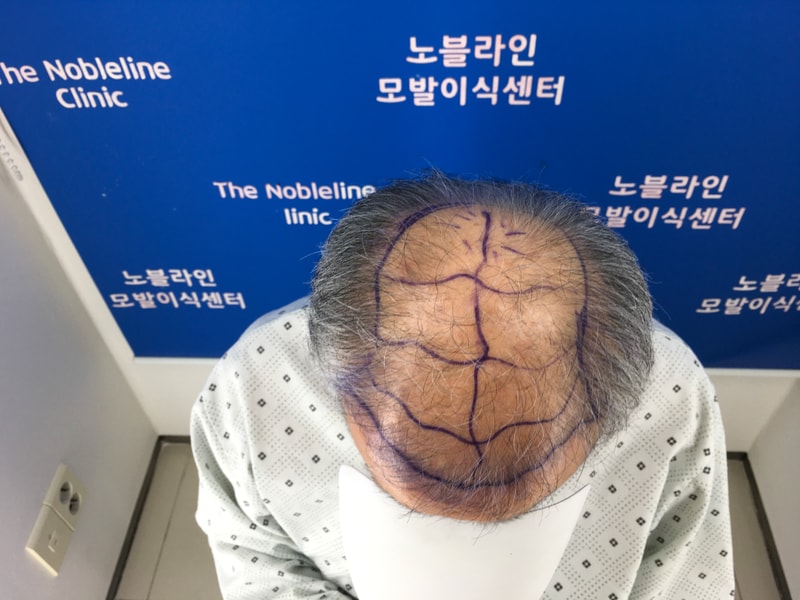
In my case, it was not just an M shape, but an M shape penetrated in the direction of the top of the head and hair loss was connected to the frontal part, so the area was very large. When I received the estimate, I found that it was about 60 square centimeters (㎠).
You don't know because it's a human head, so if you put it on A4 paper and draw it, it's huge.
I have to fill that part, but if I plant it poorly, it will look empty again, and if I cover it roughly, I think I will want to do the second and third surgery again later, so I wanted a high-density transplant.
The director told me that in the case of high-density transplants, about 50 hair follicles should go in one ㎠, and from that point of view, the 1,900 hair follicles estimate from PoOO is far short, and I found out that the hairline I wanted could never come out.
In this way, we reached a reasonable conclusion and accepted 3,500 hair follicles, and the problem was the cost.
I liked the hospital and trusted the director, but the cost difference was not small, so I thought about it for a long time in the counseling room. What was interesting was that neither the director nor the counseling manager rushed me at all even while I was thinking about it for so long. Thanks to this, I was able to think comfortably, but on the other hand, I also felt the pressure to make a more serious decision.
In the end, I thought, 'If you're going to have surgery because you're working hard, let's do it properly.' Rather than planting poorly and regretting it, I wanted to solve my hair loss problem for sure. That's how I decided to cancel my appointment for the 4OO surgery and proceed with the surgery in The Nobleline Center for Alopecia Care.
Finally, 3,808 hair follicles, a total of 9,465 hair were transplanted.
I thought it might not end in a day because it was a mass transplant, but the surgery proceeded much faster than expected, and it was completed in a few hours. After the operation, the director briefed me directly and explained the results and conditions of the operation.
The postoperative care was also satisfactory.
I was able to check the progress while communicating with the director directly through Kakao Talk, but personally, this part was really convenient. Visiting the hospital itself is cumbersome and it is not easy to make time, so I don't like the situation where I spent a long time visiting the hospital and I can't see the director for a second.
The The Nobleline Center for Alopecia Care was much more efficient because if I sent you a picture, you could receive feedback directly from the director. Of course, if there is a problem or you need to check it yourself, they will guide you to visit the hospital.
In fact, the director explained this and that right after the surgery, but I was so busy at the time that I couldn't hear it well. However, as I went to see the progress of 8 months this time, I heard the explanation once again, and there were things that would be good for those who are worried about Hair Transplant to know.
First of all, some Hair Transplant are carried out in units of hair follicles, and others are explained based on parameters.
I think it is important to understand the concept of follicle units, especially when mass transplants like me are performed. This is because even the same 3,500 hair follicles may have different calculations for each hospital.
For example, if you calculate one hair follicle as an average of two hairs, 3,500 hair follicles are 7,000 hairs. On the other hand, if one hair follicle is calculated as an average of 2.5 hairs, it is 8,750 hairs. Even though they are the same 3,500 hair follicles, the actual implanted parameters differ by 1,750 moles.
This difference can be felt even greater if you are quoted at a cost per hair follicle. This is because even if you pay the same cost, the actual transplant parameters may vary. It may not be a big difference in small-scale transplants, but I think it's an important factor that can affect the results if you do a large-scale transplant like me.
I was told that on average, 2.86 hair per hair follicle was found in this surgery. You said it was quite high, and thanks to this, a total of 9,465 moles were able to be transplanted in large quantities.
Another important part I heard was the hair follicle amputation rate.
In The Nobleline Center for Alopecia Care, you generally tried to keep the hair follicle cutting rate in the 1% range, but in my case, the final cutting rate was confirmed to be 1.71%. You explained that the operation was stable and well performed.
And after the Hair Transplant, I learned something while talking with my acquaintances around me, and I wrote it down because I was wondering if it would be helpful.
There are a few people who have had Hair Transplant other than me, and when I said I had a mass transplant, they asked me if I had planted 5,000 hairs, and I said I had planted more than 9,000 hairs, and they were surprised how I planted them all at once a day.
When I asked if 5,000 hair is not a mass transplant, there are many hospitals that can't even plant them all at once if they have a mass transplant even if it's only 5,000 hair. There are many reasons, but I think it's a lack of skills.
Of course, that's my personal thought, and there's no law that says you have to plant a mass transplant a day. However, it is true that from the patient's point of view, dividing surgery several times is burdensome for schedule and recovery.
In that sense, if you need a large-scale transplant, I think it's better to take this into account and have stable results and, preferably, a hospital that can perform surgery well at once. (I think this part is because I'm so confident in transplant technology.)
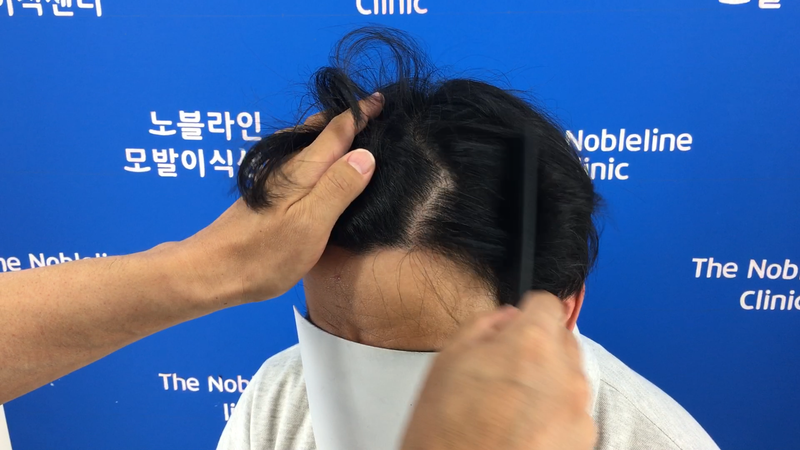
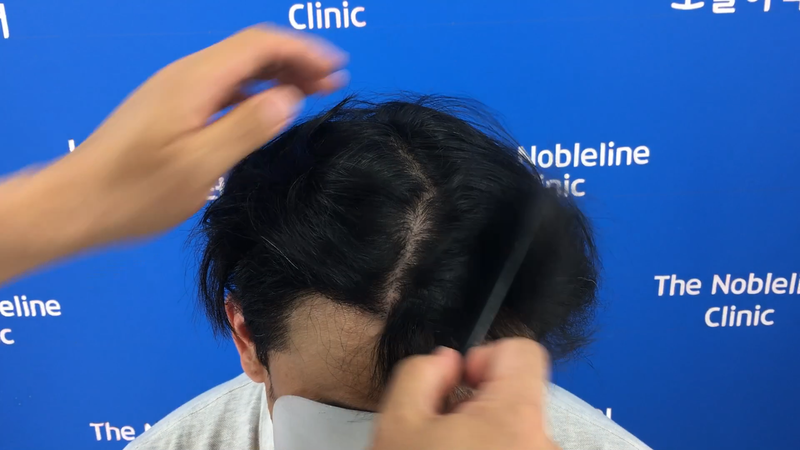
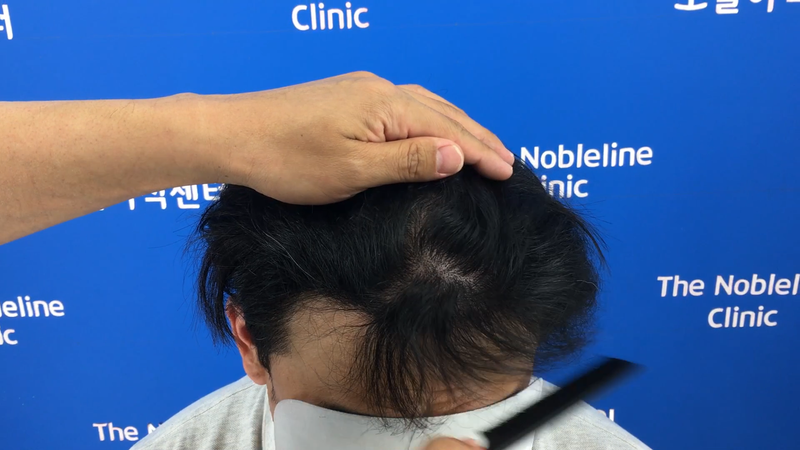
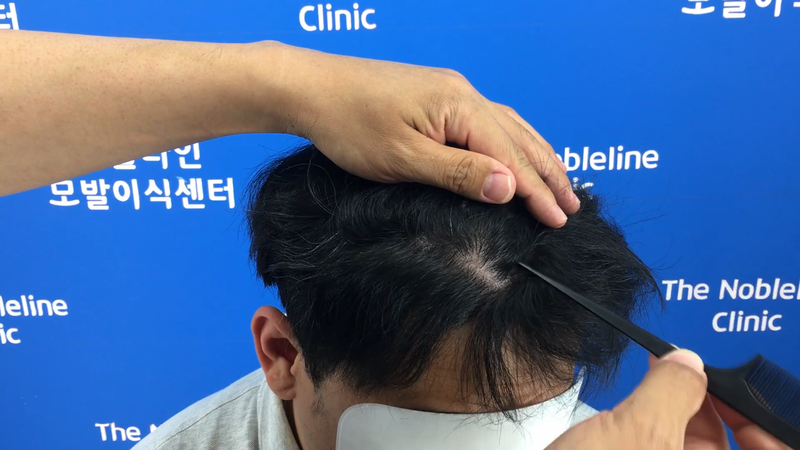
Many people grow out their bangs to cover the upper part when they transplant in large quantities, but I didn't do that because I didn't completely lose hair to the top of my head, but I really did it by filling up the front part.
To be honest, I told you that I wanted to fill everything, but I was skeptical about whether it would really happen after the surgery. To be more honest, I thought I shouldn't. But as you can see from the picture, all the areas where there was really hair loss were filled with almost normal numbers.
I'm currently in my 8th month, but my satisfaction is quite high. It was unimaginable when I had surgery last year. Not only the hairline, but also the deep M-shape was filled really naturally, and the density seems to be a normal value.
If you're lucky, it might be a lucky case for me, but hair transplants don't always work.
What seems to be luck was that I even made an appointment for surgery at another hospital and got to know the director of the The Nobleline Center for Alopecia Care at his recommendation, and since then, the director's skills have been the best, and incidentally, I think I had my own management.
Before deciding on the surgery, I really thought a lot about the cost, but looking back now, I think it was a good choice in the end. If I had decided based on the cost at that time, I don't think I would have felt the same satisfaction as I do now.
I hope it will be a little helpful for those who are worried about mass transplantation like me. Everyone, fighting! I'm so proud of you!!!



Comments 4